The robot · X1 · experimental first version
SOMO X1
One humanoid. Swappable everything.
[Introduce the robot in three to four sentences: the job it is built for, the environment it works in, and why a humanoid form makes sense there.]
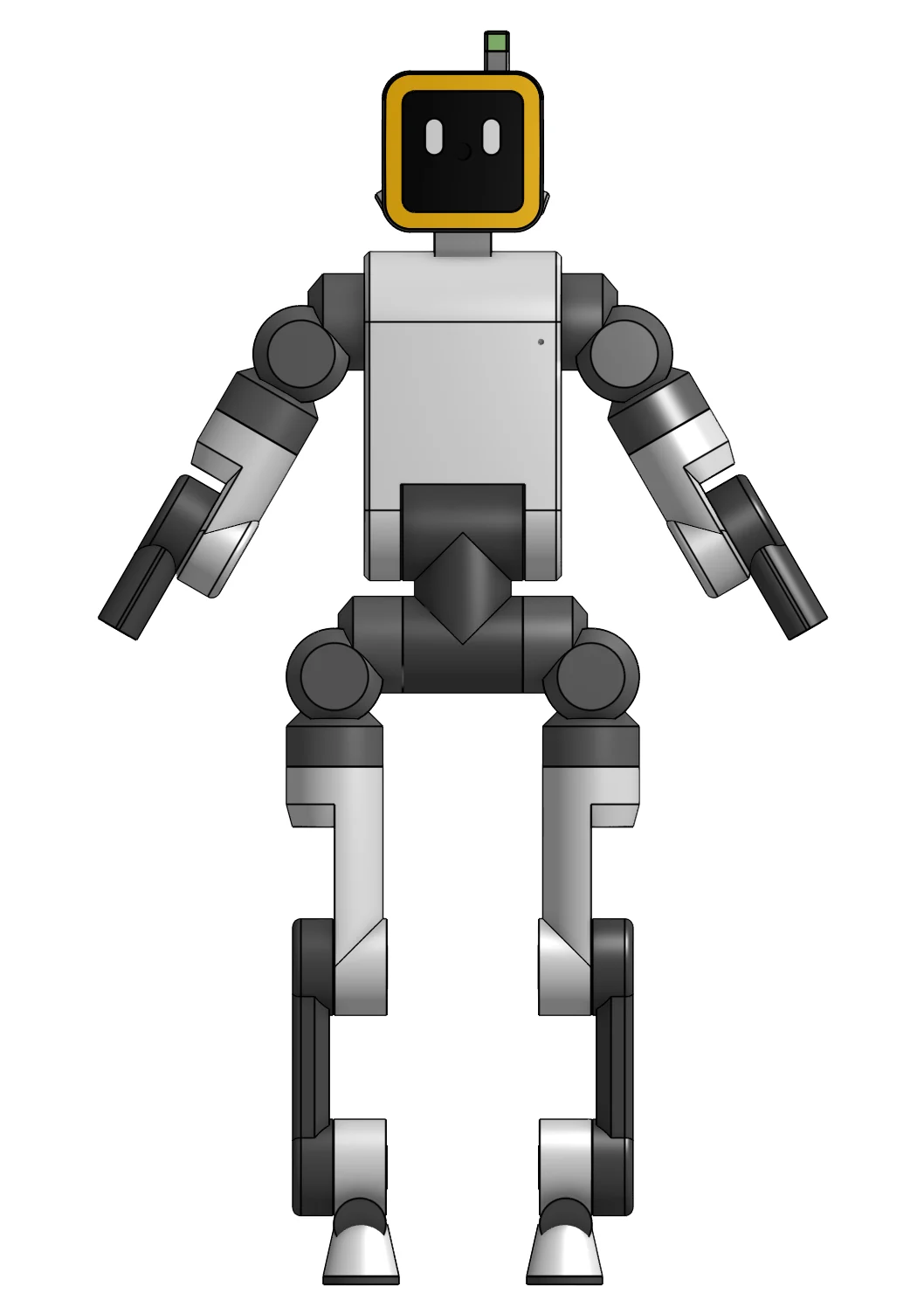 Front · CAD
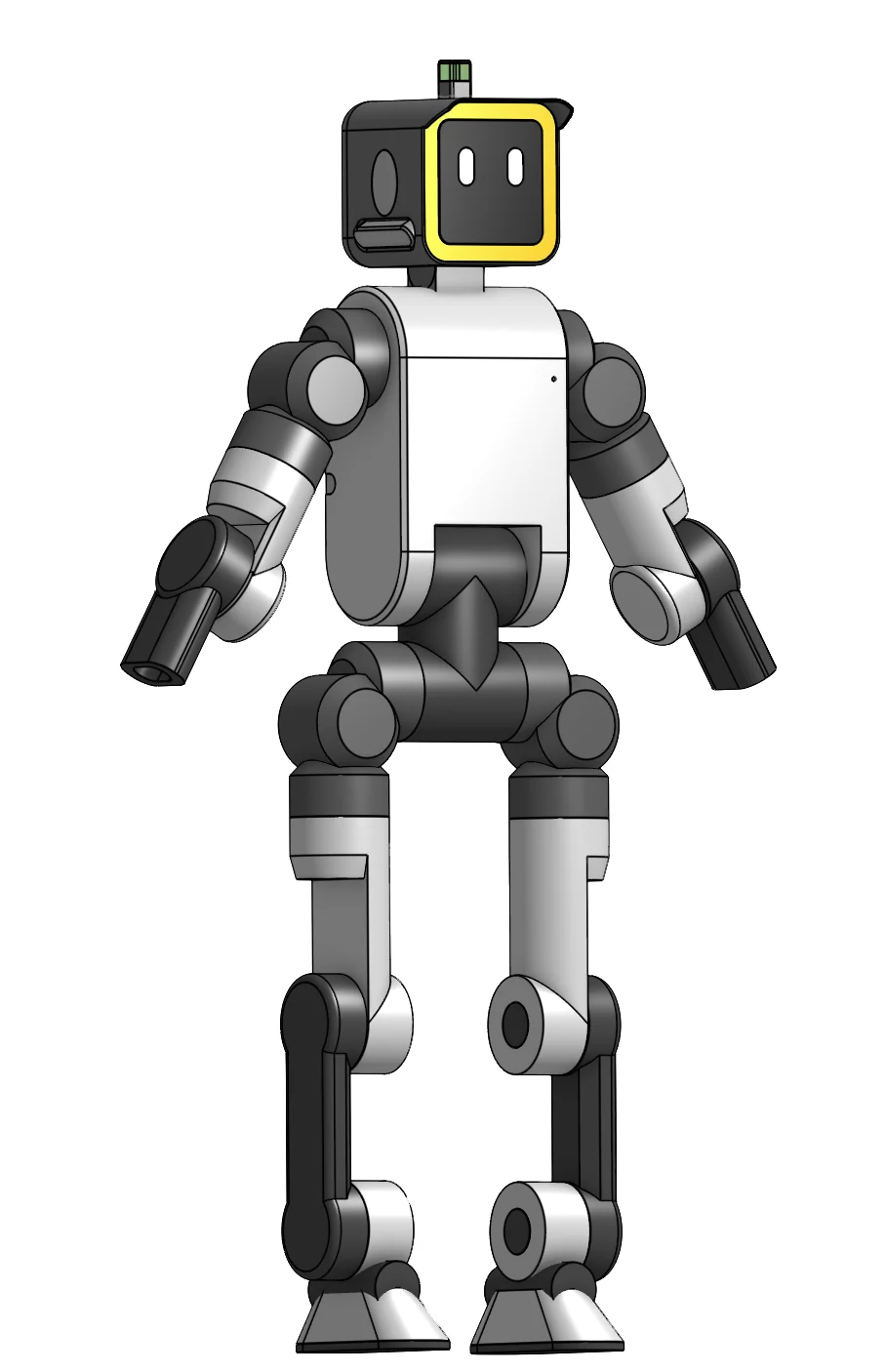 Three-quarter · CAD
Why a humanoid?
The world is built for legs.
Almost every space we work in was designed by people, for people: stairs between floors, a step at the loading dock, a sill under every fire door, a platform next to the machine. All of it assumes that whoever works there walks.
You can see what that means every day. A single step can lock out a wheelchair user – not because of the person, but because the building was planned around legs. A wheeled robot meets the same walls.
Wheels are not worse. A car beats any person on a motorway and loses on a staircase. Where the infrastructure is built for wheels, wheels win. Most real workplaces are not built for them – so MORO walks, and can work where people work without rebuilding the factory first.
Wheels or legs?
It depends on the floor.
Where a site is built for wheels, wheels win. Most sites are not.
What's on board.
Head and torso carry the sensors and the interface – everything a person on the floor needs to read the robot at a glance.
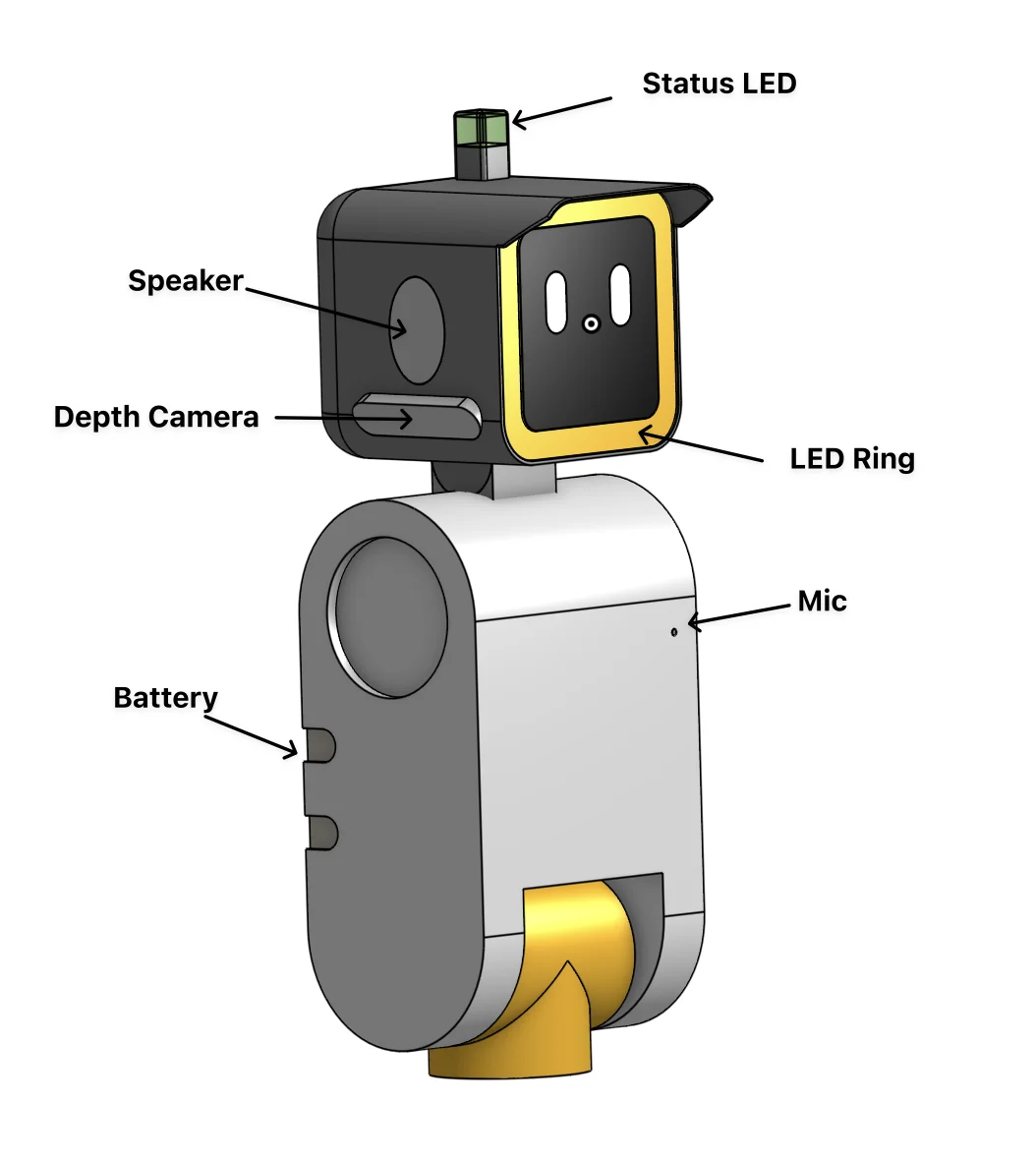
- Status LEDShows the robot's state from across the hall.
- LED ringFrames the face and signals attention and intent.
- SpeakerVoice feedback and acoustic warnings.
- Depth cameraSees people, parts and obstacles in 3D.
- MicrophoneVoice commands from the operator.
- Battery13S Li-ion pack in the torso, accessible from the side.
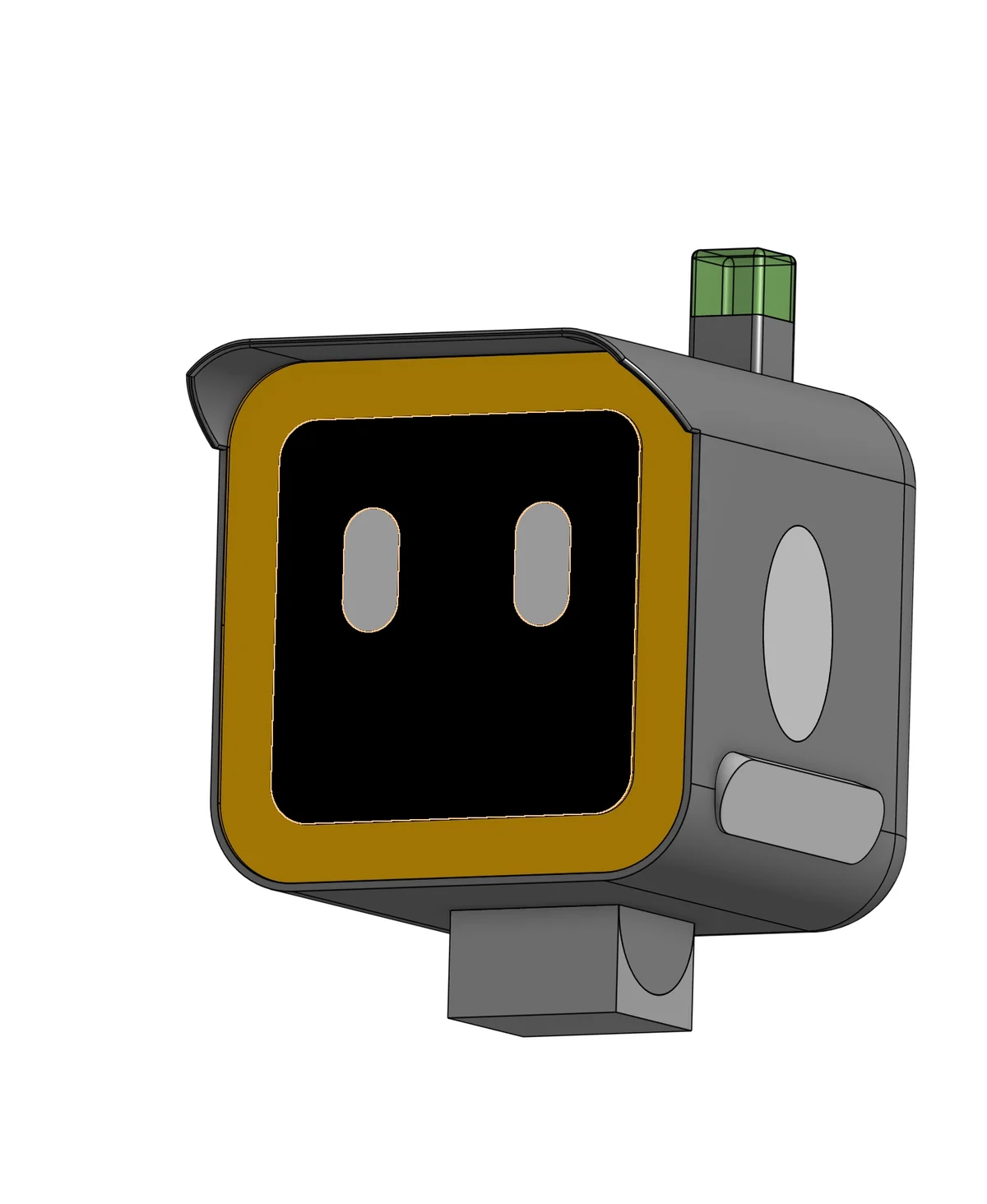
Interface
A face that says what it's doing – and what it will do next.
The display shows where the robot is looking, whether it is waiting and when it needs help. People on the floor should never have to guess.
Specifications
Draft values for SOMO X1.
X1 is our experimental first version. Numbers will be filled in once the prototype has been measured.
- Height
- [—] cm Standing, head included
- Weight
- [—] kg With battery
- Degrees of freedom
- [—] Legs, arms, waist, neck
- Payload
- [—] kg Both arms, close to the body
- Battery
- 13S Li-ion Capacity [—] Wh
- Runtime
- [—] h Typical duty cycle
- Walking speed
- [—] m/s Flat factory floor
- Sensors
- [—] Depth camera, IMU, joint encoders
- Connectivity
- [—] [Wi-Fi / Ethernet / fieldbus]
Where it works.
First use cases we want to test with pilot partners.
Machine tending
Loading and unloading CNC machines and presses during night shifts.
Intralogistics
Moving boxes and small load carriers between stations.
Inspection
Walking rounds, reading gauges and reporting anomalies.
Pilot projects
Test it on your floor.
We are looking for a small number of manufacturers in Upper Austria for the first pilot projects.